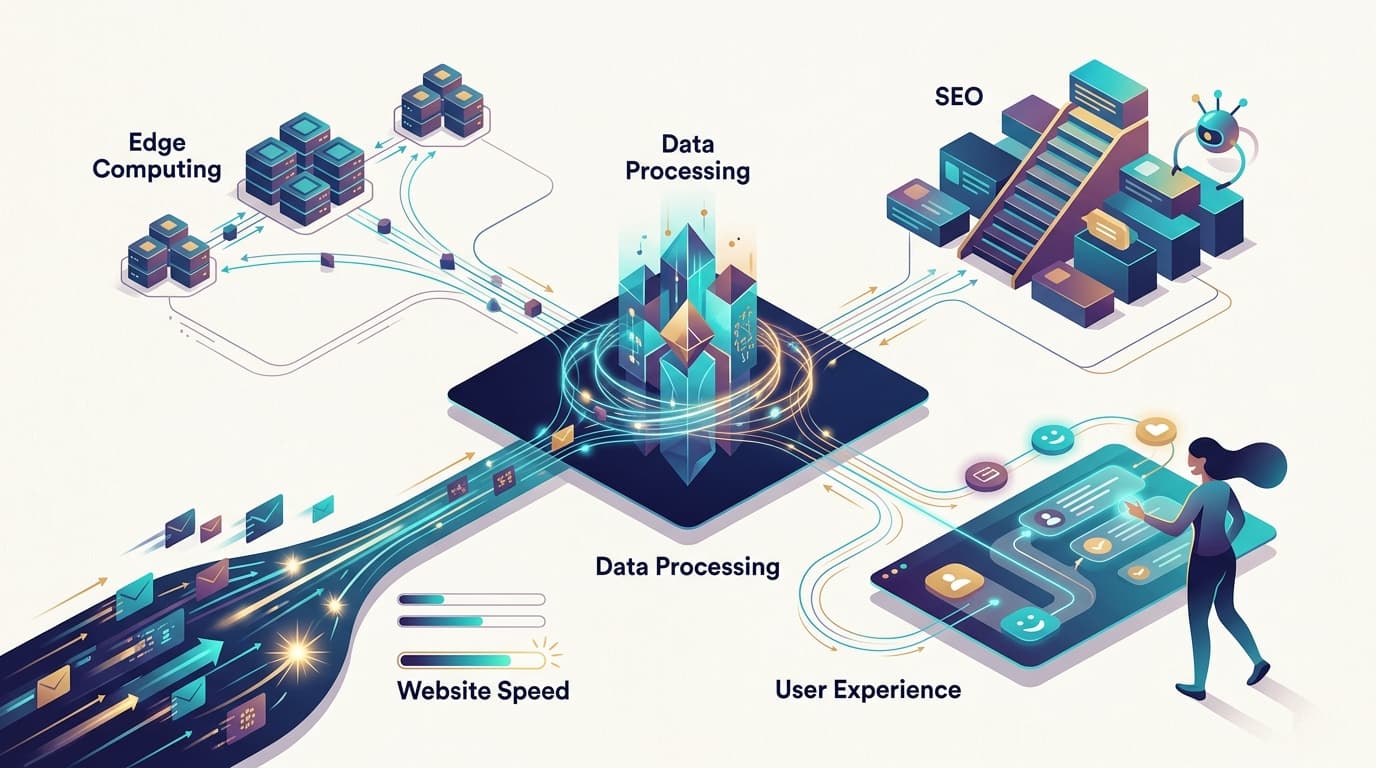
Unlocking the Future of SEO: Integrating Edge Computing for Enhanced Performance
Discover how edge computing is revolutionizing SEO strategies by boosting website speed, enhancing data processing, and improving user experience for a competitive edge.
Understanding Edge Computing: A Primer
Edge computing is a distributed computing paradigm that brings computation and data storage closer to the location where it is needed, to improve response times and save bandwidth. In essence, edge computing shifts the paradigm from traditional cloud computing, where data is processed in centralized data centers, to a more decentralized approach where data processing occurs at the 'edge' of the network. This is becoming increasingly important as the volume of data generated by IoT devices and other technologies continues to grow exponentially. By processing data at the edge, businesses can reduce the time it takes to get actionable insights, which can be crucial in fast-paced environments like financial services and healthcare.
The core idea of edge computing is to process data closer to its source, which reduces latency and increases the speed of data processing. This is particularly crucial for applications that require real-time processing and immediate results, such as IoT devices, autonomous vehicles, and complex data analytics. For example, in a smart city, edge computing can be used to process data from traffic cameras and sensors in real-time, allowing for immediate adjustments to traffic signals to ease congestion. By decreasing the distance data has to travel, edge computing ensures faster processing and enhances the overall efficiency of digital operations.
For businesses, integrating edge computing into their IT infrastructure allows for better handling of the massive influx of data generated by modern applications. As more devices become interconnected, the necessity for rapid data processing grows, making edge computing a pivotal technology for future digital infrastructures. Companies that successfully implement edge computing can achieve significant competitive advantages by providing faster, more reliable services to their customers. Moreover, edge computing can also help in reducing costs associated with data transfer and storage in centralized data centers.
The Impact of Edge Computing on Website Speed
Website speed is a critical factor in both user experience and SEO rankings. Edge computing significantly enhances site performance by caching content closer to users, thus reducing loading times. This proximity minimizes latency and accelerates data delivery, providing a seamless browsing experience. For instance, a global e-commerce platform can use edge servers to cache product images and descriptions at various locations around the world, ensuring that users in different regions experience fast load times regardless of their physical distance from the main server.
Faster page load times directly correlate with improved SEO rankings. Search engines prioritize websites that offer quick access to content, as this is a key indicator of a positive user experience. By leveraging edge computing, businesses can ensure their sites perform optimally, leading to higher search engine rankings and increased visibility. Google, for example, has explicitly stated that page load speed is a ranking factor, particularly for mobile searches. Therefore, businesses that neglect website speed may find themselves losing out to competitors who have optimized their sites for performance.
Reduced latency by processing data closer to users
Improved website performance and loading times
Enhanced user satisfaction and engagement
Potential cost savings on bandwidth by reducing data travel distances
Transforming Data Processing for SEO Optimization
Edge computing transforms data processing by decentralizing it, allowing for more efficient handling of data-heavy tasks. For SEO purposes, this means that websites can handle complex queries and deliver content more effectively, which is crucial for maintaining competitive rankings. For example, a news website that updates its content frequently can use edge computing to ensure that its latest articles are instantly available to readers, regardless of their location. This instant availability can improve user engagement and reduce bounce rates, both of which are important SEO metrics.
By utilizing edge computing, businesses can enhance their data analytics capabilities, enabling them to gather and process user data in real-time. This allows for more accurate targeting of content and advertisements, which can significantly boost engagement rates and conversion metrics. For instance, an online retailer can use edge computing to process customer data at the point of sale, allowing for personalized recommendations that are more likely to result in a purchase.
Edge computing enables real-time data processing, which is critical for delivering personalized content and improving SEO strategies. This capability allows businesses to react swiftly to changing market conditions and user preferences.
Enhancing User Experience with Edge Computing
User experience is at the heart of successful SEO strategies. Edge computing enhances user experience by minimizing latency and ensuring that users have immediate access to the content they seek. This is particularly beneficial for mobile users and those accessing websites from remote locations. A travel booking site, for example, can use edge computing to ensure that users can quickly search for and book flights, even during peak travel periods when traffic to the site is high.
In addition to speed, edge computing also bolsters security, which is a critical component of user trust. By processing data closer to the source, businesses can implement robust security measures that protect user information and promote a safe browsing environment. This is especially important for websites that handle sensitive information, such as financial institutions and healthcare providers. Enhanced security measures can prevent data breaches and build consumer confidence, which is vital for maintaining a positive online reputation.
Improved page load speeds
Enhanced security and data protection
Seamless access to content from any location
Ability to handle high volumes of traffic without compromising performance
Implementing Edge Computing in Your SEO Strategy
Integrating edge computing into your SEO strategy requires a strategic approach. Begin by assessing your current digital infrastructure to identify areas where latency and data processing can be improved. Collaborate with IT professionals to deploy edge computing solutions that align with your business goals and enhance your website's performance. Consider conducting a thorough audit of your web assets to determine where edge computing can provide the most significant impact, such as improving load times for high-traffic pages or securing transaction data for e-commerce sites.
Focus on optimizing content delivery networks (CDNs) and leveraging edge servers to cache content and handle data requests efficiently. This not only improves load times but also ensures that your website remains resilient against traffic spikes and potential cyber threats. Furthermore, educate your team about the benefits of edge computing and how it can be used to enhance their specific roles, whether in marketing, IT, or customer service.
Align edge computing initiatives with your SEO objectives to maximize website performance and user engagement. Regularly monitor performance metrics to assess the effectiveness of your edge computing strategy and make data-driven adjustments as needed.
The future of digital infrastructure lies at the edge, where data is processed swiftly and efficiently, transforming the landscape of online interactions.