SEOJune 23, 2026
Future-Proofing Your SEO Strategy: Adapting to Algorithm Changes
Discover innovative strategies to adapt to constant search engine algorithm changes and ensure your SEO efforts remain effective and future-proof.

Understanding the Evolution of Search Algorithms
Search engines are constantly evolving to provide the most relevant results to users. Over the years, Google and other search engines have refined their algorithms to tackle issues like keyword stuffing, black hat SEO tactics, and irrelevant content. Understanding these changes is crucial for developing a robust SEO strategy.
Initially, search engines relied heavily on keyword frequency and backlink quantity to rank websites. However, as these methods were exploited, search engines advanced their algorithms to prioritize quality content and user experience. Today, algorithms consider factors such as site speed, mobile-friendliness, and user engagement.
The evolution of algorithms has been marked by significant updates like Google’s Panda, Penguin, and more recently, BERT. Each update reflects a shift towards understanding user intent and delivering precise results. For SEO professionals, staying informed about these updates is essential for maintaining and improving search rankings.
Identifying Key Trends in Algorithm Updates
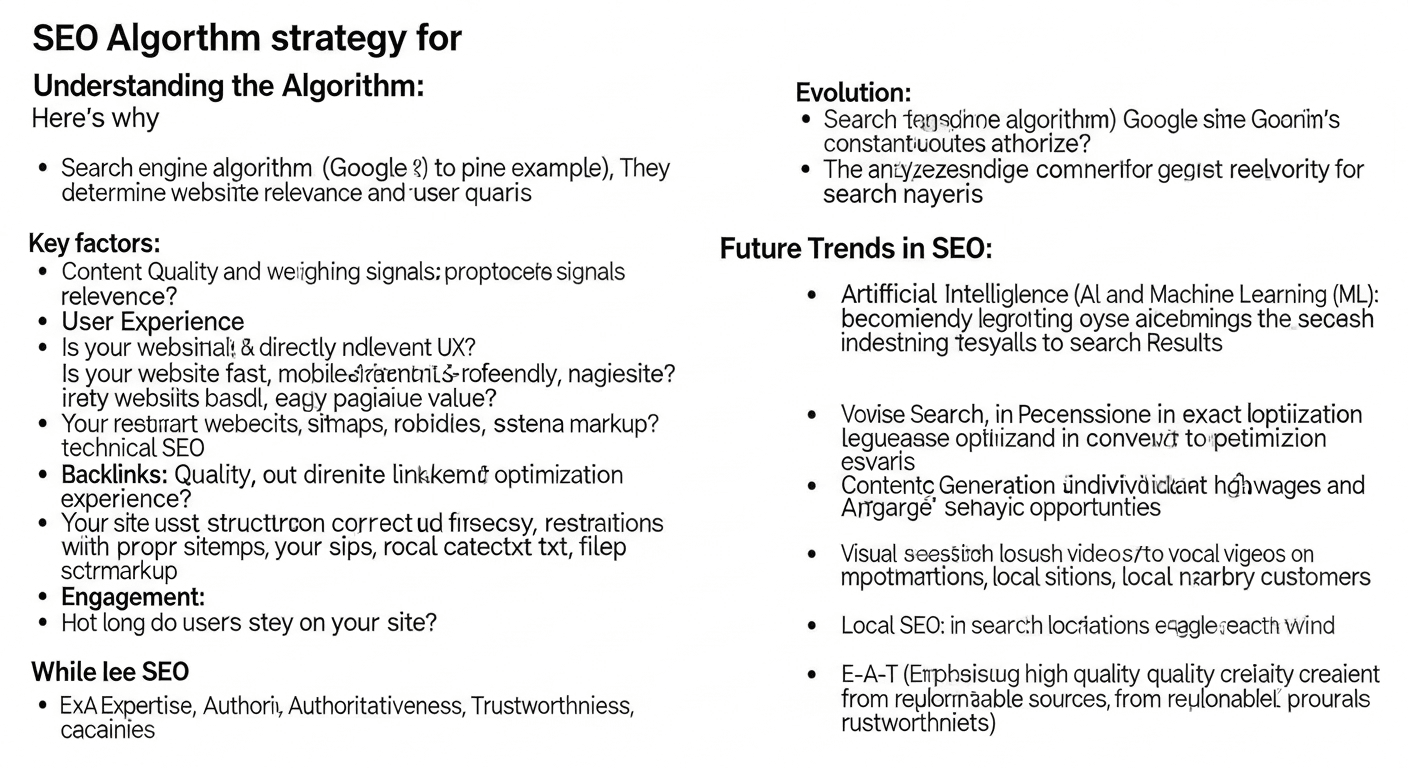
One of the key trends in recent algorithm updates is the emphasis on E-A-T: Expertise, Authoritativeness, and Trustworthiness. This focus encourages the creation of content that is not only accurate but also credible and valuable to the user. Websites that demonstrate these qualities are more likely to rank higher in search results.
- Emphasis on high-quality, authoritative content
- Increased importance of user intent
- Greater focus on mobile-first indexing
Another trend is the shift towards mobile-friendly content. With the majority of searches being conducted on mobile devices, search engines now prioritize sites that offer a seamless mobile experience. Mobile-first indexing means that Google predominantly uses the mobile version of the content for indexing and ranking.
Voice search optimization is also gaining importance. With the rise of smart speakers and voice-activated devices, optimizing for voice search involves using natural language and focusing on conversational keywords. This trend highlights the need for content that aligns with how people speak, rather than how they type.

Adapting Content Strategies for Algorithm Resilience
To create content that withstands algorithm changes, focus on delivering genuine value to your audience. This involves understanding their needs and crafting content that addresses those needs comprehensively. High-quality content that answers user queries effectively is more likely to maintain its ranking regardless of algorithm updates.
Diversifying content formats can also help in adapting to algorithm changes. Incorporating videos, infographics, and podcasts can engage a wider audience and cater to different user preferences. Additionally, interactive content such as quizzes and polls can boost user engagement and dwell time on your site.
Tip: Regularly update your existing content to ensure it remains relevant and authoritative, which is crucial for maintaining search rankings.
Finally, ensure your content is optimized for featured snippets. These are short, concise answers to search queries that appear at the top of Google’s search results. By providing clear and direct answers to common questions, you increase the chances of your content being featured, improving visibility and traffic.
Technical SEO Tactics to Maintain Rankings
Technical SEO plays a critical role in maintaining search rankings, especially as algorithms become more sophisticated. Ensuring your website is technically sound involves optimizing site speed, enhancing mobile usability, and improving site architecture. A site that loads quickly and is easy to navigate will be favored by search engines.
Structured data, or schema markup, is another vital aspect of technical SEO. It helps search engines understand the content of your pages more effectively, which can lead to better visibility in search results. By using structured data, you can enhance your content’s appearance with rich snippets, which can improve click-through rates.
- Optimize site speed with caching and image compression
- Ensure mobile-friendliness with responsive design
- Implement structured data for rich snippets
Regularly auditing your website for technical issues is also imperative. Conducting site audits helps identify and rectify issues such as broken links, crawl errors, and duplicate content. These fixes ensure that your website remains in good standing with search engines, helping to sustain your rankings over time.
Future-Proofing with Data-Driven Insights
Data analytics is a powerful tool for future-proofing your SEO strategy. By leveraging data, you can gain insights into user behavior, content performance, and traffic sources. These insights are invaluable for making informed decisions about where to focus your SEO efforts for maximum impact.
Utilizing tools like Google Analytics and Search Console can provide detailed reports on various metrics, such as bounce rates, session durations, and keyword rankings. This data helps in identifying trends and patterns that can inform your content and optimization strategies.
Important: Set up regular data review sessions to stay updated with changes and adjust your SEO tactics accordingly.
Predictive analytics, which involves using historical data to forecast future outcomes, can also be instrumental. By predicting shifts in user behavior or search trends, you can adjust your strategy proactively, ensuring sustained visibility and relevance in search results.